
Tanks
Shop HVAC tanks, expansion tanks, thermal expansion tanks, hydronic tanks, and refrigeration receiver tanks for heating, cooling, and refrigeration systems. Furnace Part Source carries replacement tanks from brands such as Zilmet, Copeland, Xylem Bell & Gossett, and other HVAC manufacturers.
Use the product list below to find the correct tank by brand, capacity, connection size, part number, system type, or application. Before ordering, confirm the tank volume, pressure rating, connection type, refrigerant or fluid application, and equipment specifications to help match the correct replacement.
- Product
- Qty in Cart
- Quantity
- Price
- Subtotal
-
Zilmet ZFT24R-60 6.3 Gallon Hydro Tank 1/2
ZILMET
MSRP: $237.02Now: $183.15Zilmet ZFT24R-60 6.3 Gallon Hydro Tank 1/2 FurnacePartSource.com CommitmentMSRP: $237.02Now: $183.15 -


Copeland 977-0056-06 Liquid Receiver Tank
Copeland
MSRP: $504.62Now: $389.93Copeland 977-0056-06 Liquid Receiver Tank FurnacePartSource.com CommitmentMSRP: $504.62Now: $389.93 -

Zilmet ZHT35 9.2 Gal 3/4" Expansion Tank
ZILMET
MSRP: $165.92Now: $128.21Zilmet ZHT35 9.2 Gal 3/4" Expansion Tank FurnacePartSource.com CommitmentMSRP: $165.92Now: $128.21 -


Zilmet ZHT24-60 6.3 Gal 1/2" Expansion Tank
ZILMET
MSRP: $135.61Now: $104.79Zilmet ZHT24-60 6.3 Gal 1/2" Expansion Tank FurnacePartSource.com CommitmentMSRP: $135.61Now: $104.79 -


Zilmet ZHT18-30 4.8 Gal 1/2" Expansion Tank
ZILMET
MSRP: $61.83Now: $47.77Zilmet ZHT18-30 4.8 Gal 1/2" Expansion Tank FurnacePartSource.com CommitmentMSRP: $61.83Now: $47.77 -


Zilmet ZFT8R-15 2.1 Gallon Hydro Tank 1/2
ZILMET
MSRP: $96.00Now: $74.18Zilmet ZFT8R-15 2.1 Gallon Hydro Tank 1/2 FurnacePartSource.com CommitmentMSRP: $96.00Now: $74.18 -


Zilmet ZFT18R-30 4.8 Gallon Hydro Tank 1/2
ZILMET
MSRP: $186.52Now: $144.13Zilmet ZFT18R-30 4.8 Gallon Hydro Tank 1/2 FurnacePartSource.com CommitmentMSRP: $186.52Now: $144.13 -


Zilmet ZETA-60 Hydronic Expansion Tank 35 Gal
ZILMET
MSRP: $1,480.50Now: $1,144.02Zilmet ZETA-60 Hydronic Expansion Tank 35 Gal Must Ship by Freight TruckMSRP: $1,480.50Now: $1,144.02 -


Zilmet ZETA-40 25 Gal Hydronic Expansion Tank
ZILMET
MSRP: $1,547.44Now: $1,195.75Zilmet ZETA-40 25 Gal Hydronic Expansion Tank Must Ship by Freight TruckMSRP: $1,547.44Now: $1,195.75 -


Zilmet ZETA-20 10.9 Gal Hydro Expansion Tank
ZILMET
MSRP: $925.83Now: $715.42Zilmet ZETA-20 10.9 Gal Hydro Expansion Tank Must Ship by Freight TruckMSRP: $925.83Now: $715.42 -


Zilmet ZETA-15 7.8 Gal Hydro Expansion Tank
ZILMET
MSRP: $772.27Now: $596.75Zilmet ZETA-15 7.8 Gal Hydro Expansion Tank FurnacePartSource.com CommitmentMSRP: $772.27Now: $596.75 -


Zilmet ZEP5 SS Thermal Tank 2.1 Gal 3/4" SS Thermal Tank
ZILMET
MSRP: $55.39Now: $42.80Zilmet ZEP5 SS Thermal Tank 2.1 Gal 3/4"MSRP: $55.39Now: $42.80 -


Zilmet ZEP12 SS Thermal Tank 4.8 Gal 3/4"
ZILMET
MSRP: $83.52Now: $64.54Zilmet ZEP12 SS Thermal Tank 4.8 GalMSRP: $83.52Now: $64.54 -


Zilmet ZEP1 SS Thermal Expansion Tank
ZILMET
MSRP: $48.81Now: $37.71Zilmet ZEP1 SS Thermal Expansion Tank FurnacePartSource.com CommitmentMSRP: $48.81Now: $37.71 -


Zilmet ZS12 Tank 3.2 SS 3/4" SS
ZILMET
MSRP: $342.18Now: $264.41Zilmet ZS12 3.2 SS Tank 3/4" SS FurnacePartSource.com CommitmentMSRP: $342.18Now: $264.41 -
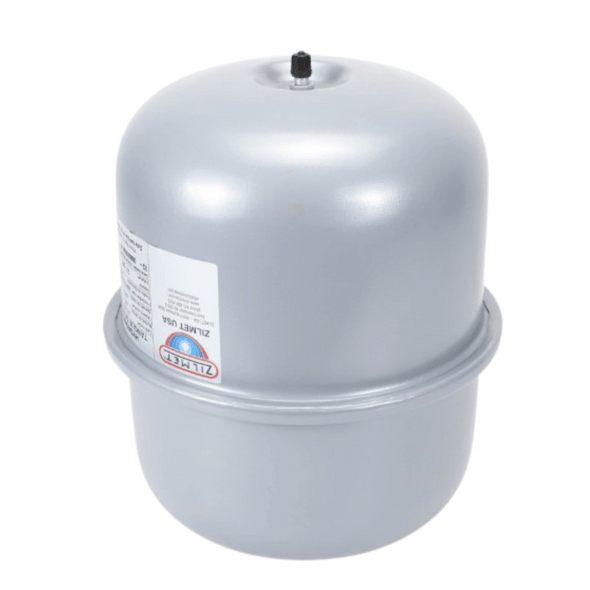

Zilmet ZHT8-15 Expansion Tank 2.1 Gal 1/2"
ZILMET
MSRP: $62.20Now: $48.07Zilmet ZHT8-15 Expansion Tank 2.1 Gal 1/2"MSRP: $62.20Now: $48.07 -


Copeland 077-0075-00 Receiver Tank
Copeland
MSRP: $299.26Now: $231.25Copeland 077-0075-00 Receiver Tank FurnacePartSource.com CommitmentMSRP: $299.26Now: $231.25 -
Refrigerant R410A-25 25# TANK REFRIGERANT, R410A
Refrigerant
MSRP: $415.80Now: $321.30Refrigerant R410A-25 25# TANK REFRIGERANT, R410A Must Ship by Freight TruckMSRP: $415.80Now: $321.30 -

Xylem-Bell & Gossett 116300 (Replaces 116493) Pressurized Expansion Tank
Xylem-Bell & Gossett
MSRP: $3,688.74Now: $2,850.39Xylem-Bell & Gossett 116300 (Replaces 116493) Pressurized Expansion Tank 25 Gallon Tank 20.2 AcceptanMSRP: $3,688.74Now: $2,850.39 -


Xylem-Bell & Gossett 1BN318LF Expansion Tank 4.4 Gallon (Model PT-12)
Xylem-Bell & Gossett
MSRP: $181.17Now: $139.99Xylem-Bell & Gossett 1BN318LF Expansion Tank 4.4 Gallon 4.4 Gallon Tank Volume 150 PSI Max Working PrMSRP: $181.17Now: $139.99
HVAC Tanks for Heating, Cooling, and Refrigeration Systems
HVAC tanks support pressure control, fluid expansion, refrigerant storage, and system stability in heating, cooling, hydronic, and refrigeration equipment. Depending on the application, a tank may be used to absorb expanded fluid, maintain system pressure, protect connected components, or store liquid refrigerant during changing load conditions.
Furnace Part Source carries HVAC replacement tanks for residential, commercial, and light-industrial systems, including hydronic expansion tanks, thermal expansion tanks, diaphragm tanks, bladder tanks, compression tanks, liquid receiver tanks, and related replacement tank components.
Common HVAC Tanks We Carry
Common tank types for HVAC and refrigeration systems include:
- Hydronic expansion tanks for closed-loop heating and chilled water systems that need pressure control as fluid heats and cools.
- Thermal expansion tanks for managing expanded water volume in heating and water-based HVAC applications.
- Bladder and diaphragm expansion tanks for separating the system fluid from the air cushion inside the tank.
- Compression tanks for older or specific hydronic heating and cooling system designs.
- Liquid receiver tanks for refrigeration and HVAC systems that need liquid refrigerant storage.
- Receiver and refrigerant tanks for select cooling, refrigeration, and service applications.
- Replacement tank assemblies for equipment-specific HVAC repair and maintenance needs.
How to Choose the Right HVAC Tank
The correct HVAC tank depends on the system type, tank function, capacity, pressure rating, connection size, fluid or refrigerant type, and installation requirements. A tank used for hydronic heating is not the same as a liquid receiver tank used in refrigeration, so it is important to confirm the application before ordering.
For best fit, compare:
- Original tank part number or model number
- Brand and manufacturer series
- Tank volume or gallon capacity
- Connection size and connection type
- Pressure rating and temperature range
- System type, such as hydronic heating, chilled water, refrigeration, or HVAC service
- Fluid or refrigerant application
- Mounting style, tank orientation, and available installation space
If you are replacing an existing tank, check the label on the installed tank and compare it with the product listing. If the label is damaged or difficult to read, use the equipment model number, system specifications, and photos of the tank connections to help identify the correct replacement.
Expansion Tanks vs. Receiver Tanks
Expansion tanks and receiver tanks serve different purposes. An expansion tank is commonly used in hydronic heating, chilled water, or thermal expansion applications to help absorb expanded fluid and maintain system pressure. A receiver tank is commonly used in refrigeration or cooling systems to hold liquid refrigerant as operating conditions change.
Because these tanks are not interchangeable, always match the replacement tank to the system design and the original equipment specifications. Tank volume, pressure rating, connection size, and application type should be verified before ordering.
Brands and Replacement Tanks Available
Furnace Part Source carries HVAC tanks and related replacement components from brands such as Zilmet, Copeland, Xylem Bell & Gossett, and other HVAC manufacturers. Available products may include hydronic expansion tanks, thermal expansion tanks, stainless steel expansion tanks, liquid receiver tanks, refrigerant tanks, and equipment-specific tank assemblies.
Brand name alone is not enough to confirm compatibility. Always check the product details against the original tank part number, system type, gallon capacity, pressure rating, and connection requirements.
Need Help Matching an HVAC Tank?
Not sure which HVAC tank you need? Gather the part number, brand name, tank capacity, connection size, pressure rating, equipment model number, and application type before ordering. Photos of the existing tank label, piping connections, and equipment data plate can also help with part matching.
Check each product listing for current price, availability, and shipping options. If you are replacing a discontinued, damaged, or hard-to-identify tank, contact Furnace Part Source for help finding a compatible replacement.
HVAC Tanks FAQs
What is an HVAC expansion tank used for?
An HVAC expansion tank is used to absorb expanded fluid and help control pressure in a closed-loop heating or cooling system. It helps protect system components from pressure changes as fluid heats and cools.
Is an expansion tank the same as a receiver tank?
No. An expansion tank is typically used for pressure control in hydronic or water-based systems, while a receiver tank is used in refrigeration or cooling systems to store liquid refrigerant. Always match the tank to the system application.
How do I choose the right replacement HVAC tank?
Match the original part number, tank volume, pressure rating, connection size, brand, system type, and application. If the tank is part of a refrigeration system, also confirm the refrigerant application and equipment specifications.
What is the difference between bladder, diaphragm, and compression tanks?
Bladder and diaphragm tanks separate the system fluid from the air cushion inside the tank. Compression tanks are a different style of expansion tank used in certain heating and cooling systems. The correct type depends on the system design.
Can I replace an HVAC tank with a different size?
Do not choose a different tank size unless the replacement is approved for the system. Tank volume, pressure rating, connection size, and system requirements should be verified before ordering.