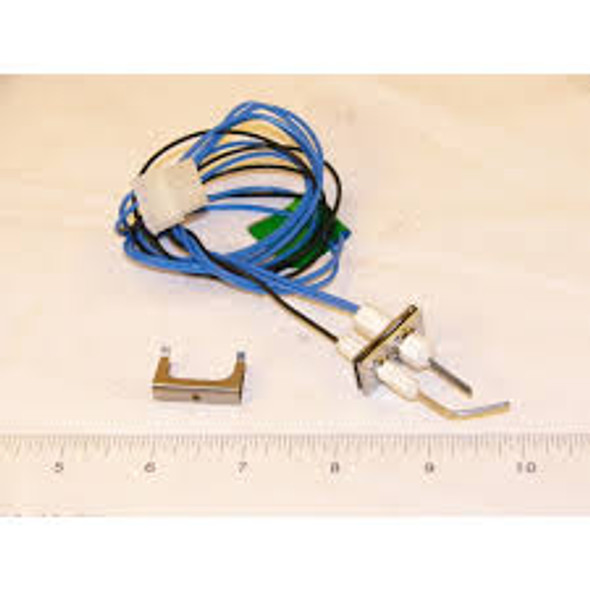
Hot Surface Ignitors
Hot surface ignitors light the burner during furnace startup by heating a ceramic element until it glows hot enough to ignite the gas. Found on most modern gas furnaces, they replaced older standing pilot lights and offer more efficient, on-demand ignition.
Furnace Part Source carries a wide range of hot surface ignitors for residential and light-commercial gas furnaces, boilers, and water heaters, including both OEM and cross-reference replacement options.
Common Hot Surface Ignitor Types We Carry
Common ignitor types include:
- Silicon carbide ignitors widely used across many furnace brands.
- Silicon nitride ignitors known for durability and faster warm-up.
- Ignitor and flame sensor combination parts that combine both functions in one component.
- Mini ignitors used on select compact furnace and appliance models.
How to Find the Right Hot Surface Ignitor
Before ordering, check the equipment data plate and the existing ignitor for the model number and part number. Confirm the mounting hole pattern and lead wire length, since ignitors that operate at the same voltage can still differ in shape and mounting style.
For best fit, compare:
- Original ignitor part number
- Voltage, typically 120V or 240V
- Mounting hole spacing and bracket style
- Lead wire length and connector type
- Equipment model and serial number
Hot surface ignitors are fragile and should be handled carefully during installation. Avoid touching the ceramic element with bare hands, since skin oils can create hot spots and shorten the ignitor's lifespan.
Hot Surface Ignitors From Leading HVAC Brands
Our catalog includes hot surface ignitors from Armstrong Air, Carrier, Trane, Lennox, Amana-Goodman, White-Rodgers, Robertshaw, York, Rheem-Ruud, and Heil Quaker, among other manufacturers, along with universal cross-reference options.
Need Help Matching a Hot Surface Ignitor?
Not sure which hot surface ignitor you need? Use the model number, serial number, and part number from your unit to narrow the search, or contact Furnace Part Source for help identifying the correct replacement.
Hot Surface Ignitor FAQs
How do I know if my hot surface ignitor has failed?
A failed ignitor typically will not glow when the furnace calls for heat, or it may glow dimly or crack. This usually prevents the burner from lighting and can trigger an ignition lockout.
Can I touch a new hot surface ignitor with my bare hands?
Avoid touching the ceramic element directly, since skin oils can create hot spots that shorten the ignitor's lifespan. Handle it by the base or mounting bracket, or use gloves.
What is the difference between silicon carbide and silicon nitride ignitors?
Silicon carbide ignitors are widely used and cost-effective, while silicon nitride ignitors typically offer faster warm-up and longer service life, often at a higher price point.
Are universal hot surface ignitors compatible with my furnace?
Many universal ignitors are designed to cross-reference several OEM part numbers. Confirm voltage, mounting hole pattern, and lead wire length before ordering a universal replacement.